Your online store invests thousands per month in Google Shopping and Search Ads. Products appear, clicks arrive, sales happen—but margins shrink as CPC rises almost inevitably. Meanwhile, a catalog with 500, 1,000, or even 5,000 products remains nearly invisible in organic search because “SEO takes time” and “we need to sell now.” This structural dependence on paid media transforms e-commerce into a cash-burning machine: revenue grows, but profit doesn’t keep up, because CAC scales along with it.
The reality is harsh but simple: an e-commerce without strong organic presence operates permanently at a structural disadvantage. You pay for every visitor, every click, every product view. Your competitor, with consolidated SEO, receives qualified traffic at no marginal cost. When both convert at the same rate, they profit and you break even—or lose. Already tight margins in online retail don’t sustain, in the long term, a model based exclusively on paid traffic.
The good news is that e-commerce has unique advantages for SEO and Ads integration that other business models simply don’t have. Rich product data—price, availability, reviews, variations—feeds both channels. Purchasing behavior reveals intent with much more clarity than generic browsing.
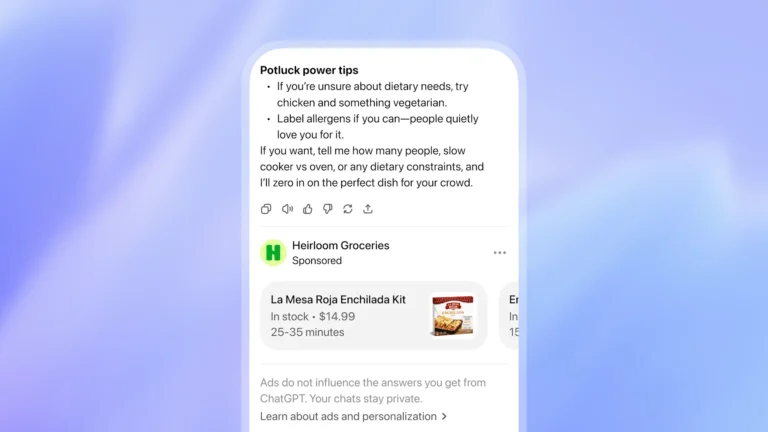
Paid and organic Shopping results can occupy the SERP simultaneously. Stores that execute this integration deliberately multiply the ROI of both channels while progressively reducing paid media dependence. This is exactly the system this guide proposes to break down.
Structural E-commerce Challenges Requiring Integrated Approach
The first challenge is the massive volume of SKUs. An e-commerce with 2,000 products has, in practice, 2,000 pages competing for visibility and needing optimization. Doing this manually, product by product, is unfeasible. The strategy needs to be systemic and supported by automation and Artificial Intelligence to gain scale.
Another critical point is inventory volatility. Products sell out. Continuing to pay for clicks on unavailable items wastes budget. But removing or deindexing pages every time stock runs out destroys accumulated organic authority and forces you to start from zero at the next restock. Mature management keeps pages indexed, with clear unavailability signaling, while dynamically pausing paid campaigns. This preserves long-term SEO without bleeding Ads.
Seasonality also requires surgical coordination. Dates like Black Friday, Christmas, or Mother’s Day create demand spikes where everyone competes aggressively. Building organic authority months before these periods allows capturing high-intent traffic without paying inflated seasonal CPC. Ads enter as strategic complement at peaks—not as the sole sales engine when auctions are most expensive and margin-destructive.
Strategic Allocation: What to Advertise and What to Prioritize in SEO
Not every product deserves the same approach. Integration begins with clear economic decisions.
High-margin products justify dual investment. If you profit $50 per sale even paying $5 CPC, it makes sense to advertise aggressively while building organic presence. In the medium term, each organic sale adds $5 of net margin that was previously consumed by Ads.
Low-margin products or extreme competition, on the other hand, rarely close the equation on paid. If margin is $8 and competitive CPC is $6, Ads becomes financially questionable. SEO—via content, comparisons, buying guides, and strong category pages—becomes the only sustainable way to generate profit on these SKUs.
Seasonal products require different logic. Items that sell only a few months per year don’t justify heavy Ads investment outside the critical window. Building organic authority during off-season captures early researchers and reduces Ads dependence precisely when CPCs explode.
Decision Framework by Product Type
| Product Profile | Margin | Ads Competition | Search Volume | Recommended Strategy |
|---|---|---|---|---|
| Hero products | High (>$40) | Any | High | Aggressive Ads + heavy SEO |
| Commodities | Low (<$10) | Very high | High | SEO priority, minimal Ads |
| Specialized niche | Medium | Low–medium | Low–medium | SEO as main engine |
| Seasonal products | Variable | High at peak | High at peak | SEO off-season + Ads at peak |
| Loss leaders | Low or negative | Variable | High | Ads only if generates cross-sell |
Product Pages Designed for Paid and Organic Conversion
The product page needs to serve two audiences simultaneously. Ads traffic arrives with high intent and wants to decide quickly. Organic traffic is more heterogeneous—some are researching, others comparing, others ready to buy.
The solution is layered architecture. A strong hero section, with images, price, clear benefits, and visible CTA, serves immediate buyers. Below, collapsible content with technical specifications, reviews, frequently asked questions, and comparisons serves those needing more context. This way, you don’t sacrifice Ads conversion to please SEO, nor lose SEO by focusing only on conversion.
Technical SEO elements—Product schema, breadcrumbs, alt text, structured price and stock data—reinforce understanding for bots without polluting user experience. It’s invisible optimization for buyers, but extremely valuable for rankings.
Product images also serve a dual role. Professional photos improve direct conversion. When properly optimized, they also rank in Google Images and generate additional organic traffic. A single investment in well-done photography impacts Ads, SEO, and UX simultaneously.
Category Pages as Strategic Assets
In many e-commerces, category pages are just product grids. This is a strategic waste. Category terms—like “running shoes,” “electric coffee makers,” or “ergonomic chairs”—concentrate enormous search volume.
A well-structured category page combines educational content at the top (explaining how to choose, differences between types, important criteria) with product listing right below. This serves users in research phase and ready buyers at the same time. It also transforms the category into a valid landing page for both broad Ads campaigns and high-volume organic rankings.
The hierarchy of categories and subcategories distributes authority internally. Main categories reinforce subcategories, which reinforce products. This architecture facilitates human navigation and algorithmic reading, accelerating indexing and ranking.
Google Shopping: When Organic and Paid Operate Together
The product feed is the heart of the Shopping ecosystem. It feeds paid ads and organic results. Optimizing titles, descriptions, images, and categorization once benefits both channels. Bad feed hurts Ads and eliminates organic visibility simultaneously.
Reviews are another critical multiplier. Stars appear in ads and organic listings, elevating CTR disproportionately. Consistent review collection programs transform customer feedback into permanent asset that works for Ads and SEO at the same time.
Price and availability need to be perfectly synchronized between feed, site, and ads. Any inconsistency destroys trust and wastes paid clicks. Well-implemented integrations avoid this silent budget leak.
Using Ads Data to Guide SEO with Precision
Search Terms Reports reveal how customers actually describe your products. Real purchase language frequently differs from “official” catalog language. This data refines titles, descriptions, and organic content based on proven intent.
Products with high conversion rate in Ads are natural candidates for priority organic investment. Ads functions as rapid validation laboratory: what sells well paid tends to sell even better when traffic is organic.
Finally, terms with prohibitive CPC are clear signals of SEO opportunity. The more expensive it is to buy that click, the more valuable it becomes to rank organically for it. SEO, in this context, isn’t a slow alternative—it’s an economic lever for margin survival.
Retargeting Integrated with Organic Journey
Organic visitors who don’t immediately convert are premium candidates for retargeting. They demonstrated sufficient interest to find your store via search—a signal of intent frequently stronger than a paid click—but still need more touchpoints before final decision. In this context, retargeting doesn’t act as failure correction, but as natural continuation of an organically initiated journey.
Display or Shopping Ads campaigns allow keeping relevant products in the prospect’s field of vision while they compare options, validate price, and reduce uncertainties. Retargeting closes the gap between organic discovery and paid conversion, without requiring that the entire persuasion process be purchased from the first click.
Segmentation gains sophistication when based on real organic behavior. Visitors who explored multiple categories indicate broad interest and can be impacted with bestseller ads or general collections. Those who navigated deeply in a specific category should receive highly focused ads in that universe. Users who abandoned cart need to be re-impacted exactly with the nearly-purchased products. The more retargeting reflects the real organic journey, the higher the relevance and conversion rate.
Attribution also needs to evolve to recognize this complementary role. Linear or time-decay models distribute value between initial organic touchpoint and final retargeting, revealing SEO’s real ROI. Last-click, on the other hand, undervalues the channel that built trust and overvalues the ad that merely closed an already matured decision.
Content Beyond Products: Guides, Comparisons, and Resources
Buying guides transform e-commerce into authority, not just showcase. Content like “How to choose a laptop for remote work” educates, reduces friction, and naturally leads to the category when the reader is ready to buy. These materials rank for top-of-funnel terms and introduce the brand long before the transactional moment—something unattainable for competitors dependent only on bottom-funnel Ads.
Comparison pages capture extremely high-intent traffic. Searches like “iPhone 15 vs Samsung S24” indicate imminent decision. When your honest comparison ranks, you position yourself as a trusted source and naturally direct the reader to product pages. This organic traffic typically converts exceptionally well because the user is already evaluating concrete options.
Evergreen resources further amplify SEO’s compound effect. Size charts, technical guides, glossaries, and reference materials continue attracting relevant visitors for years. The investment is made once, but the return accumulates continuously—unlike Ads, which cease the instant budget is paused.
Seasonality: Organic Preparation and Paid Execution
Building organic authority three to six months before seasonal peaks allows capturing early researchers. People start searching “Mother’s Day gifts,” “Black Friday electronics,” or “back to school” weeks before the peak, when CPCs are still controlled. Ranking well in this initial period drastically reduces Ads dependence when competition inflates auctions.
During the peak, Ads remain relevant as amplification. Even occupying good organic positions, you only capture part of available clicks. Using Ads to increase participation when value per conversion still justifies CPC is rational. The correct logic isn’t Ads versus SEO, but SEO as base and Ads as amplifier at critical moments.
Post-season analysis closes the strategic cycle. Evaluating which categories performed better organically, where CPC became unfeasible, and where organic reduced the need for paid spend generates learnings that refine the next seasonality preparation with much more efficiency.
Margin Analysis by Product and Channel
Real profitability varies significantly between channels. A product can generate $20 contribution via organic and only $8 via Ads after subtracting CPC. Strategic decisions should consider margin per channel, not just sales volume. Products economically viable only organically justify SEO investment even with lower immediate demand, as they’re structurally more profitable long-term.
Loss leaders also assume different roles depending on channel. Advertising them may make sense if there’s proven cross-sell. Ranking them organically allows generating volume and perception of competitive pricing without paying for each click. Correct analysis considers average ticket, basket size, and attachment rate, not just unit margin.
Inventory segmentation completes the equation. High-margin, abundant-stock products call for aggressive Ads. Medium-margin, limited-stock products work better via organic. Dynamic strategies, continuously adjusted to margin and availability reality, surpass static models defined once.
How Niara Accelerates This Integrated Strategy
The biggest barrier to implementing this unified vision is production capacity. Creating unique descriptions for thousands of products and in-depth blog articles requires an army of writers—or the right Artificial Intelligence tool.
This is where Niara enters as your e-commerce execution engine:
Scale in content production: Use Niara to create product descriptions optimized for SEO and persuasive for conversion in seconds, allowing you to optimize your entire catalog (not just best-sellers) quickly.
Blog posts that convert: Remember those “buying guides” and “comparisons” essential for capturing top-of-funnel traffic? Niara generates these contents based on real data, helping you build topical authority without losing days writing.
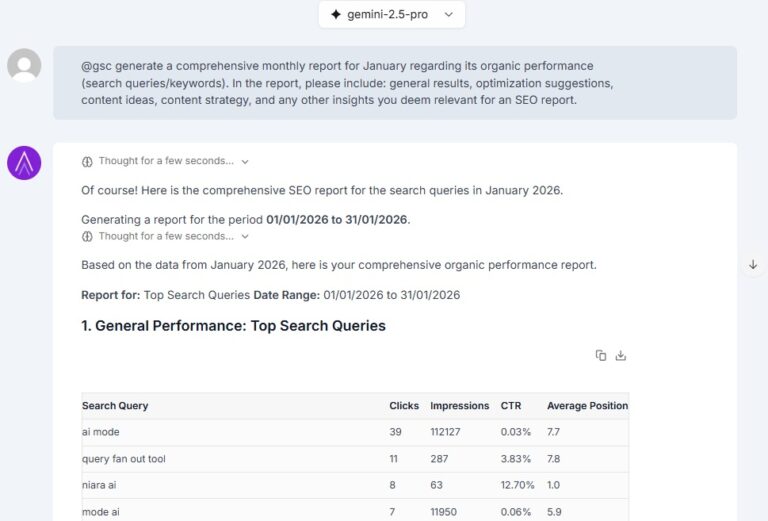
Opportunity Analysis (GSC): Through Google Search Console integration, Niara identifies which terms are already bringing impressions but few clicks, suggesting where you should focus optimization efforts for quick position gains.
Specialist ChatSEO: Need long-tail keyword ideas for a specific category or title suggestions that increase CTR in both organic and ads? Just ask ChatSEO.
While your Ads data shows what to sell, Niara delivers the necessary content to position these products organically, reducing your paid media dependence through operational efficiency.
Success Cases: E-commerces Dominating via Integration
Fashion stores that invested in editorial content—style guides, trends, and combinations—built massive organic traffic. Ads began acting mainly on retargeting and specific promotional campaigns, reducing blended CAC and enabling sustainable margins even in highly competitive markets.
E-commerces specializing in electronics that created detailed technical comparisons dominated bottom-funnel terms. Organic visitors arrive highly educated and convert two to three times better than generic paid traffic. Retargeting closes the journey, but Ads dependence dropped drastically.
Vertical marketplaces that structured deep categories and technical content captured thousands of high-intent long-tail keywords. This traffic would be economically unfeasible via Ads, but organically transforms into consistent incremental profit.
Conclusion
Sustainable e-commerce cannot depend exclusively on paid traffic without facing, sooner or later, fatal margin compression. As competition grows and CPCs rise, operating without solid organic base means paying indefinitely for each customer while competitors capture demand at near-zero marginal cost.
Strategic integration doesn’t eliminate Ads; it redefines its role. SEO builds the foundation of sustainable demand, while Ads accelerate tactical results, close journeys, and amplify peaks. Executed with discipline and economic vision, this integration creates viable unit economics, more robust margins, and defensible competitive advantage in the long term.
Don’t let technical complexity impede your organic growth. Niara is here to simplify this process, allowing you to create scale and quality content in minutes, not months. Create your free account today and start balancing your traffic equation.
Funded by the European Union – NextGenerationEU. However, the opinions expressed are those of the authors only and do not necessarily reflect the views of the European Union or the European Commission. Neither the European Union nor the European Commission is responsible for these opinions.
Visit the official website: https://recuperarportugal.gov.pt/